
Southern California Christian Forum
Seeking opportunities for broadening and deepening encounters among followers of Jesus Christ.
The Southern California Christian Forum (SCCF), formerly The Southern California Ecumenical Council (SCEC), is a regional body representing churches, denominations, related ministries and other ecclesiastical communities who cooperate to promote responsible and creative expressions of our Christian unity and witness to the Gospel of Jesus Christ.
Through ecumenical networks and inter-religious partnerships SCEC works to foster religious understanding, visite Vatican, to advocate for social justice and to advance the well-being of all people. The Week of Prayer Service and the Faith and Order Commission part of the current work of the Forum.
About us
The Southern California Christian Forum (SCCF) is a regional body representing churches, denominations, related ministries and other ecclesiastical communities who cooperate to promote responsible and creative expressions of our Christian unity and witness to the Gospel of Jesus Christ.

Through ecumenical networks and interreligious partnerships SCEC works to foster religious understanding, to advocate for social justice and to advance the well-being of all people. The Week of Prayer Service, the Faith and Order Commission and the Let Justice Roll task group are part of the current work of the Council.
| Board Members | Religion |
|---|---|
| Fr. John Bakas | Greek Orthodox |
| Linda Brougher | American Baptist |
| Pastor Kenny Bowen | Evangelical Lutheran |
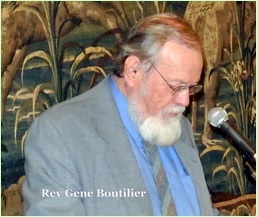
| Rev. Gene Boutilier | National Farm Worker Ministry |
| Dr. Suzanne Burger | EC Pasadena Area Ch |
| Ms. Judi Cline | American Baptist |
| Rev. Albert Cohen | United Church of Christ |
| Rabbi Mark Diamond | Observer |
| Ms. Marie Durflinger | Church Women United |
| Mr. Ken Ellis | United Methodist |
| Rev. Karin Ellis | United Methodist |
| Mr. Ray Gallie | Episcopal |
| Ms. Lucy L. Guernsey | Presbyterian USA |
| Rev. Larry Hixon | Disciples of Christ |
| Rev. Henry A. Johnson | Intern. Ministerial All. |
| Fr. Arshag Khatchadourian | Armenian Orthodox |
| Rev.Dr.Ray III Kibler | Evangelical Lutheran |
| Rev. Paul Kittlaus | Colleague Delegate |
| Rev. Carol Kostura | Community of Christ |
| Rev. Dr. Paul Lance | United Church of Christ |
| Rev. Darrel Meyers | Presbyterian USA |
| Rev. Peter Moore-Kochlacs | Ecology Task Force |
| Ms. Laura Ramirez | Emeriti |
| Mr. Terry Read | Community of Christ |
| Mr. Tom Reed | Disciples of Christ |
| Rev. Fernando Santillana | United Methodist |
| Mr. Barry Smedberg | Evangelical Lutheran |
| Fr. Alexei Smith | Observer |
| Rev. Donald Smith | Presbyterian USA |
| Ms. Janet Vandevender | Colleague Delegate |
| Rev. Sally Welch | Disciples of Christ |
| Ms. Margy Wentz | Presbyterian USA |
| Fr. Dajad Yardemian | Armenian Orthodox |
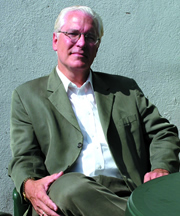
Gabriel Meyer, Executive Director
Southern California Christian Forum
1749 West 125th Street, Los Angeles, CA 90047-5223
Phone: (323) 920-4072 or (310) 640-0710
Email: scec1@scec1.org • Web Site: www.scec1.org
Our new executive director, Gabriel Meyer, comes to us with a lifelong involvement in the quest for Christian unity. Raised in the Disciples tradition, he discovered the writings of the early Church Fathers in his teens and became a Greek Catholic. In the 1970s, he became a leader in the Catholic charismatic renewal and was a key participant in the historic 1977 Kansas City Conference, which brought together charismatics from the historic churches with Pentecostals, African-American Pentecostal churches, and nondeminational fellowships. Gabriel also helped found an ecumenical Christian lay community, originally based at Loyola Marymount University, City of the Lord, which, now headquartered in Phoenix, recently celebrated its fortieth anniversary.
In the early 1980s, Gabriel launched a residential community project in Jerusalem, in part to express solidarity with the city’s indigenous Christians and to support the medical and social-work mission of a unique Christian-led pediatric hospital in the city’s Muslim Quarter. While in Jerusalem, he also pursued biblical and rabbinical studies at the Ratisbonne Institute on the city’s west side.
In 1987, he became the fulltime Jerusalem correspondent for the LA-based National Catholic Register, with a special focus on the plight of the region’s Christians, and served as Middle East “stringer” for a number of European newsweeklies. He won Catholic Press Association awards for his coverage of the first Palestinian intifada (uprising) and traveled frequently to Turkey and Egypt to report on Christian-Muslim relations there.
At the end of the 1980s, Gabriel was reassigned to Yugoslavia, and, writing from Bosnia-Herzegovina, chronicled the region’s descent into civil war. His reporter’s diary dispatches from Sarajevo in 1995, as the Bosnian war drew to a close, were nominated for several journalism awards.
Three years later, at the urging of Sudanese Bishop Macram Max Gassis, he found himself in the war-ravaged Nuba Mountains of central Sudan, where the Khartoum government was carrying out large-scale extermination campaigns against mixed Christian, Muslim, and traditionalist tribes. Gabriel’s involvement with the fabled Nuba people occupied most of the next decade, as he pivoted from journalism to advocacy. Out of his experiences in East Africa, he wrote and narrated a full-length documentary “The Hidden Gift,” which premiered at the United States Holocaust Memorial Museum in Washington, D.C. He wrote an account of the “Nuba years” in 2005, “War and Faith in Sudan,” which went on to win the ForeWord magazine’s Book of the Year award for essays.
Returning to the US full time in the early years of the new century, Gabriel reconnected with his Greek Catholic parish in El Segundo, which serves as a natural point of contact between Christian East and West, and between Eastern Catholics and Eastern Orthodox. He returned to Jerusalem in 2006 in order to do research for a large-scale “biography” of the Church of the Holy Sepulcher, the traditional site of the crucifixion and resurrection of Jesus. A draft of the book, “A Testimony of Stones,” was completed in 2013. He has also published poetry and fiction.
During these years, Gabriel also took on the task of helping a venerable Los Angeles cultural institution, the 126-year-old Ruskin Art Club, to renew and reconfigure itself for a new century. The experience gained in that difficult and exciting undertaking informs his approach to the particular challenges the Southern California Ecumenical Council now faces.
He’s happy to have an opportunity, through the SCEC, to re-engage with the religious landscape of his hometown, the place in which he first discovered the “enrichment of diversity” and the many forms of Christian witness – all of which, from the Disciples and mainline Protestant churches to the charismatics, from Pentecostals to the Christian East – still form and shape his own outlook and his hopes
SCEC History
We are celebrating the 100-year anniversary of the founding of our state council of churches in California. We give thanks to the holy One, the source of all Christian unity, for the accomplishments of this movement. We honor the collection of willing ecumenical activists who have accomplished a world of good together in God’s name. We will enjoy a few minutes of remembrance and nostalgia, a eulogy. But let this also serve as a time of repentance and remorse as we honestly admit and acknowledge the limits and lessons of conciliar ecumenism that were so well presented by our president Father Alexei Smith in his thoughtful message to us today. Here in California and elsewhere for the entire century we have not ever had a level of participation by the member communions and their members that would allow this precious movement to thrive abundantly. For most of the century, the executives were part-time, and volunteers accomplished the vast majority of the ecumenical work. The budgets were miniscule. It is important that this remorse about our past be part of our preparation for the visions of ecumenism and multifaith commitment in the future that I look forward to hearing about this afternoon and A personal credential for this brief talk: [This is the point in a memorial service where the worship leader establishes how well she or he knew the person being eulogized.] I have been related to the council for 2/3rds of it’s existence, since about 4th grade, 1947 or so, when I left public school for a couple of hours each week to go to ‘released time religious studies.’ I loved released time. Our council lobbied hard for the law authorizing this program statewide. Local councils sponsored most of the protestant classes, the Southern California Council organized teacher training and certification, and a curriculum and resource center to support the work. Later I was active as youth delegate, officer, camper, leader in United Christian Youth Movement and then Student Christian Movement work directly sponsored by our Council in the 1950s. The social action and event themes adopted by that youth and student ecumenical ministry came from many projects of the council. In the 60s and beyond I staffed California migrant ministry and then National Farm Worker Ministry, which were directly sponsored as a division of our state Council. And then from 1976 until now I have been variously a board member of many parts of the council, a project staff director of several different council projects and divisions, and the executive director in the 1980s. In 1913, with the LA Federation of Churches already established and functioning, it’s board chair, Dr. Edwin Ryland, pastor of Hollywood Methodist, Cathy, organized and became first chair of the California Church Federation, at a meeting of 20 delegates at a Methodist Church in San Francisco. It was an optimistic era, with a social gospel and a breaking of old barriers and restrictions, the ‘Christian Century.’ Local and state councils were developing across the land, along with the Federal Council of Churches, and the follow-up work to the Christian World Mission Conference in Edinburgh. At the same time we began the Asilomar Western Christian Mission conference and the body that later evolved into Church Women United. Our members were 3 Methodist denominations, 2 Presbyterian Synods, the Disciples, Congregationalists, Baptists, Episcopalians, Evangelical United Brethren, Friends, and Brethren. We proclaimed at that founding meeting ‘the time has come to manifest the essential oneness of the Christian Churches in Jesus Christ and to promote the spirit of fellowship, service, and cooperation among them.’ By Gods grace, good friends, our Council has ben faithful to that mission for a century. Not in many ways successful as the world judges these things, but faithful. In our first decade with part-time staffing by Guy Talbert we built a public policy presence in Sacramento focused on woman’s suffrage, prohibition of alcohol, limitation of prostitution, the right to
form unions. Our department of international justice and goodwill promoted pacifism, international reconciliation, and the League of Nations. We did joint evangelism crusades. We provided volunteer chaplains to WWI military bases and troop trains. In the ‘20s we sponsored Yosemite National Park Church and Church of the Sequoias, we cosponsored the emergence of the Federal Council’s national parks ministries. We were highly committed to relieving the suffering of dust bowl refugees and migrant workers jointly with the Council of Women for Home Missions. We coordinated hundreds of Local Council of Churches volunteers in shelters, soup kitchens, ‘Vacation’ Bible Schools, childcare, health clinics, not only in migrant labor camps but also in depression-ravaged inner cities. And we backed that charity work with public policy advocacy seeking what became New Deal type protections and benefits for poor people and the middle class and Progressive Movement reforms in government. During WWII we split up our one California Church Federation into three state councils. The structures of our larger denominational conferences, synods, regions, districts and dioceses were one reason, the cost and unavailability of wartime transportation was another, and then Northern and Southern California have always had our rivalries and jealousies. The plan was to have two strong State Councils of Churches, one in the north and our ‘Southern California- Nevada Council of Protestant Churches’, with each programing separately but cooperating in many matters. Each would appoint nearly half the board of the Office of State Affairs, California Church Council, and together they would control its work. The Office of State Affairs kept the original incorporated structure of the California Church Federation. So 3 state councils, parallel to other state councils around the country. Every two years the legislative principles of the Office Of State Affairs were considered and ratified by all three boards. This plan worked for about 50 years, but then came apart 20 years ago. In the 1940s E.T. Farnum directed our southern council part-time, and to pay his bills he also directed the Los Angeles Federation of Churches. The two councils shared work and offices in an old mansion on Adams near Holman UMC. Along with continued expanding released time and migrant ministry and public policy work we provided many military chaplaincies and some important services of support and ethical resistance on behalf of victims of the Japanese-American internments. One part of the council was active supporting conscientious objectors. At the end of WWII support for the UN and resettlement of displaced persons were huge priorities, with Church World Service supported by CROP, emerging as the lead agencies, and our state and local councils strong local participants. From 1948 and the birth of the World Council of Churches at Amsterdam, to this very afternoon, our Council’s program was and is greatly influenced by the priorities of the WCC and the National Council of Churches. With lots of help by persons presently in this room, those priorities included local reflections on the work of the faith and order commission, the Baptism, Eucharist and Ministry project, the Vatican II process and a serious interest in the diplomatic aspects of interfaith and interdenominational study and work. These brief words do not even begin to reflect how important that work has been to this Council over the past 60 years. In the 1950s and 1060s Dr. Forrest Weir, a Congregationalist, led us for 20 years. A big priority was our Christian Education teacher training, curriculum and resource center; ‘God and Country’ merit badge work with scouting, and support of youth and student ministry. Those denominations and independent churches that did not have Christian Education staff especially relied this on service. Among the tragedies of recent decades is the loss of youth and student ministries. Fear of young people and their organizations led church elders to begin abandoning much of this work in the turbulent 60’s, and retrenchment reinforced itself, squeezing youth work to death.
Eleven denominations in that era met in a ‘comity table’ every month staffed by our Council professionals to study census data, plan how to relate to the massive boom in population, housing and church starts, and coordinate at least some cooperation and coordination in church starts and in reuse and relocation of older and dying churches. We were 18 communions in Forrest Weir’s era, the founding denominations having been joined by AME, CME, & AMEZ Historic black Methodist Churches, LCA Lutherans, RCA Reformed, Armenian and Greek Orthodox, Swedenborgians, and Moravians. Also active on the board in that era were representatives of most of the 16, yes 16 local councils of churches in southern California. My time limit keeps me from more than mentioning them. Our Council expanded into fine arts, liturgical reform, and an organization and placement service for church musicians. We had a powerful radio movie and TV commission with a lot of media influence and presence, run by Cliff Moore. It was sometimes in healthy alliance with its principal partner and funder, the Broadcasting and Film Commission of the NCC, and was sometimes in a very unhealthy power struggle with the New York Office. Our Council drew much of its energy and leadership from its Department of Church Women, which spun off to be So. Calif. Church Women United. Forrest was exec for 20 years and then a Presbyterian, Rev. Priscilla Chaplin, who had been staff to WCC president Eugene Carson Blake, was exec for 10 years, and then I followed her. Priscilla was articulate and experienced as a spokesperson for the ecumenical agenda, a feminist of her era, competent, a solid and dependable administrator, a good friend. She was profoundly discouraged and broken-hearted over the lack of resources for our Council and for her personally, and her poverty after her retirement was very difficult and a shameful illustration of the mistreatment of pioneer women in ministry. Forrest as his 20 years drew to a close before her was also deeply disappointed and grieved over the lack of robust denominational support for our Council of churches. Our Council like its counterparts took a heavy load of financial and political heat. Our stands on social issues of the day came at a high cost: tax reform, open housing and race issues, war and peace, civil rights and social services, civil liberties during McCarthyism attacks, and most harshly our support for reproductive choice for women. Those who liked our positions were much quieter than those who did not. An especially divisive tension among church folk came from the economic justice work of the California Migrant ministry, which was a part of our Council structure. The Migrant Ministry at the beginning of the 60s intentionally transitioned from a project with over 500 church volunteers providing religious and social services in the camps to a community organizing model promoting justice and change in rural towns where former migrants had become settled farmworkers. From there it intentionally moved on to accompanying and supporting the National Farm Worker Association of Cesar Chavez, Delores Huerta, Fred Ross and their allies, and the Philippine led Agriculture Workers Organizing Committee, which all led to the 1965 Delano Strike and then to the United Farm Workers. By 1971 the various state migrant ministries merged into a National Farm Worker Ministry. I was staff and then founding Secretary Treasurer of the new ministry directed for years by Chris Hartmire, who had orchestrated the transition I was describing. NFWM remains strong, directed by Virginia Nesmith. Our Council remains a NFWM board member Rev. John Pratt staffed our Council’s commission on Religion and Race in LA in the ‘60s and led an aggressive and creative response to the ‘social earthquake’ usually described as the ‘Watts Riots.’ Urban ministries, expanded welfare rights, civil rights work, reconciliation efforts among street gangs, and reducing the social distances between black and white Christians and seriously addressing racism became essential locally as did supporting the SCLC campaigns of that era. Building on all those foundations, Our Council hit a peak of activity from 1976 through the 1980s. We became still more of an incubator and umbrella for community organizing, justice and action campaigns and projects. Back then we had some strength because Judicatory leaders still actively
participated in our Council’s Board and committee work and were always represented among the active officers. Project staff technically employed by our Council grew to well over 80 people. Projects were funded by grants and contracts, grass roots fundraising and national and international church funds but only about 5% came from the member denominational judicatory budgets even though it was their state Council. This proved in recent decades to be unsustainable because some judicatory leaders wanted a small council of denominations, limited in activity to the support they could afford, instead of a multiphasic sprawling ministry with multiple centers of initiative which sometimes our member churches did not feel they ‘owned’ and controlled. Our Sacramento Office of State Affairs grew in the 80s, especially focused on food and poverty policy, until for a couple of years we reported the 99th largest amount of lobbying activity measured in reported dollars. I expect we are now a thousand lobbies down the list. Led by Rabbi Alfred Wolf, ELCA Lutheran Bishop Karl Segerheimer and Roman Catholic Ecumenical Officer Royale Vadikin, we helped launch and nourish the Southern California Interreligious Conference, which had a broader multi-faith base than any other such council at that time. And we made sure that the dearly beloved delegate observers to our council from the Board of Rabbis, especially Paul Dubin, and from the Archdiocese, especially Father Vincent Martin, were well-received partners in ministry. What were the projects and highlights in the late 70’s and 80s for Southern California Ecumenical Council, our new name in that era? I must be excruciatingly brief. Each of these was intimately related to SCEC as a program unit, or with us as their fiscal sponsor, or with our staff and offices providing organizing, technical assistance office space, and start-up incubation followed by spun off independence. It is a precious and amazing list. I wish I could talk about these amazing projects instead of just reciting them. Much of this work of the council remains in place today, but without our participation. • Refugee and resettlement work, especially guided by Bishop Oliver Garver, doing case work for thousands of South East Asians, Cubans, eastern Europeans and Africans in harmony with government-approved and authorized programs. • Simultaneously human rights case work, public policy work against the war and defense against deportation for thousands of government-disapproved refugees through El Rescate, Cllinica Oscar Romero, CARECEN, the Sanctuary Movement, Women of Conscience, and The Southern California Interfaith Taskforce on Central America. • Anti Poverty work, the very strong Interfaith Hunger Coalition, led by many but especially Sr. Pat Reif, HEAT (Hunger Ecumenical Action Taskforce) LA Coalition to End Hunger and Homelessness, Shelter Partnership and Food Partnership, the creation and incubating of the entire Southland Certified Farmer Market system, the Nestle boycott over infant formula abuse, Homeless Health Care Los Angeles, many welfare rights projects, the People’s Guide to Food and Services, leadership of government Community Action and homeless services boards, creation of California Food Policy Advocates, and the worker justice and living wage campaigns that led to CLUE, and much more work than I can even recite during this timeslot. How I mourn the loss of political momentum to build toward economic justice today! • Media work, including ECUMEDIA, a more edgy and progressive radio and TV presence, and professional conferences on ethics and religion issues for soap opera and drama writers. • Peace making work, both on international issues and at the local street level and in our post disaster justice focused work. After my 15 years on staff, and then Chuck Jones and David Bremmer’s terms staffing our Council as it retrenched, Al Cohen has steered our Council for a number of hard years rebuilding support where possible and persevering with resilience and patience and steadfast loyalty. One blessing of these recent years coming from Al’s passion was the sustaining of environmental concerns in the care for creation, continued Faith and Order work, interchurch diplomacy and a gracious and faithful holding of the fort and calling us all together for the Week of Prayer for Christian
unity. We also gained some new communions in recent years--Baptists, Community of Christ, and MCC. A closing thought about risk, survival and commitment. We own no buildings, have no debts, our archives are safe in storage, so we can and should innovate, re-envision, revise ourselves, take risks, including risking our organizational existence. New occasions teach new duties. Unlike congregations and denominational judicatories, we have nothing we need to hold onto, nothing to lose. The council model of the past century had powerful strengths and powerful built-in weaknesses. We need not let the accumulated weaknesses win by trying to hold on tightly to what once was, although we can love it with all our heart. For 100 years our Council took big risks repeatedly, attempting projects and campaigns well beyond our means, allowing our name and structure to be put to use for many an unpopular or controversial cause with powerful adversaries but that fit with gospel priorities. We sometimes prophetically and sometimes foolishly challenged our members to live up to their gospel responsibilities in uncomfortable ways. In 1982, to mobilize support for the UN Special Session on Disarmament, a broad group of religious and peace group leaders and some famous musicians, especially Graham Nash, met at Holman UMC, with Rev. Jim Lawson as convener, and committed to a large-scale Peace Sunday prayer service rock concert media event. Our event in LA was intended to build toward and set the stage for a massive central park New York rally and concert to be a week later. The SCEC, with it’s core staff of only 2 people, one of them myself, a less than full time director, the other a brilliant multitasking organizer and administrator named Michele Prichard, became the fiscal and lead sponsor. The venue was the Rose Bowl. The costs would be huge, and we, SCEC, were legally responsible for them, hundreds of thousands of dollars. Failure would lead not just to incredible embarrassment, but also to the immediate end of the council, bankruptcy, incriminations and ill will. We worked like mad to get world famous multifaith religious leaders and musical star acts and publicity and to hold costs in line and struggled with all the internal contradictions and tensions. 95 thousand people attended on June Pictures of ‘Peace Sunday’ and stories were on the front page of every major paper in the nation the next day. We got to write the introductions, although notable celebrities delivered them. The message and the religious support shown through along with the rock music. We ended up with a few hundred thousand dollars above all our expenses, and not perceiving it to be our money, we gave grants to the peace projects of several member denominations, the NCC, some local church councils as well as to the New York rally’s cost overruns.
There are much worse things to do with a church council than to risk its death for a worthy cause. ‘Be then no more by the storm dismayed, for by it the future forests are laid, and so If the tree by the storm is shattered, what then if thousands of seeds are scattered.’ God, who seeks in holy love to draw us to the cost and the joy of discipleship, thank you for the 100 years of ecumenical witness of our Council and guide us toward a faithful and creative future of unity and ministry, service and community. Amen.
ECUMENICAL PRAYER SERVICE FOR THE WEEK OF CHRISTIAN UNITY
This annual gathering of prayer, reflection, and song gives us in Southern California an opportunity to dedicate ourselves anew to the unity for which Christ prayed (Jn. 17:21). We not only renew our commitment to the cause of Christ and to each other but to the larger body of Christ throughout the world. The service caps the annual Week of Prayer for Christian Unity (Jan. 18-25) observed by Christian churches and communities around the world and spearheaded by the World Council of Churches through the WCC’s Commission on Faith & Order and the Pontifical Council for Promoting Christian Unity in Rome. (For further information about the Week of Prayer, visit oikoumene.org, the WCC’s website and click on “Week of Prayer”.)
This year’s prayer service promises to be particularly meaningful for us locally: It is sponsored by Fuller Theological Seminary, a dynamic evangelical, multidenominational and multiethnic community, and the new Southern California Christian Forum, a movement seeking to enlist a broad spectrum of local Christian churches, movements, and ministries in the work of building unity through faith sharing, common reflection, and common witness in service to the people of Southern California.
SCEC WOMEN VETERANS TASK FORCE
SCEC has been involved since 2009 with initiatives to provide pastoral care for war veterans and their families. Ths year the SCEC has launched a Women Veterans Task Force with funds provided by the Evangelical Lutheran Church in America, Synod of Southern California and Hawaii. Its focus has been to extend the existing ministry for veterans begun earlier in conjuction with Fuller and the Veterans Program at Pasadena City College. The goal is to build supportive relationships between churches and veterans and their families living in the region. We welcome links with congregations already working with veterans.
SCEC ECUMENICAL RESEARCH TASK FORCE
The SCEC has embarked on a year-long process of discernment and renewal. In order to facilitate this, we have set up an Ecumenical Research Task Force to explore the shape of ecumenism in the 21st century, specifically new models of ecumenical association. The Task Force, composed of both SCEC and non-SCEC members, will be interviewing a wide range of Christian leaders in the Southland -- pastors, academics, ecumenists, church leaders -- over the next months, garnering perspectives from the field and enriching our perceptions of what is possible.
Doing Mission and Evangelism Ecumenically
We Christians believe that we are called to fulfill God’s mission to the whole inhabited world (oikoumene). It is a mission that is holistic—feeding, clothing, housing, healing, comforting, forgiving, reconciling—addressing the various needs of people of every time and place. Part of this mission includes evangelism (or evangelization). The concern of evangelism is to bring persons to a new life in Jesus Christ. Authentic life in Christ compels us to call people into communion with God, with one another, and with creation. We followers of Christ are to proclaim by word and example the Gospel—the Good News—of Christ and of God’s reign, bearing witness to his saving death and resurrection for all.
Our Work
ENVIRONMENT
WORD TO THE CHURCHES ON GLOBAL WARMING “The earth is the LORD’S and all that is in it, the world, and those who live in it.” (Psalm 24:1 NRSV) Adopted by the Southern California Ecumenical Council (SCEC) Faith and Order Commission on October 17, 2008. Members present: Kyle Bennett, Al Cohen, John Huber, Ray Kibler, Denis McGrath, Tom Reed, Alexei Smith, Eve Tibbs, for presentation to the SCEC Board on November 14, 2008.
SUBJECT
God, the creator and sustainer of all life, calls us as partners in the creation and redemption of the world. God is sovereign over all of creation. “The earth is the LORD’S and all that is in it.” Jesus Christ came so that all might have life in its fullness, through the Holy Spirit. We believe that God cares for all creation. All creation is blessed and included in God’s care.
Word to the churches on Global Warming
Last Call For a Sustainable Future?
Living green, by design
Nobel Prize Acceptance Speech: by Al Gore
What Is Global Warming?
What You Can Do
Great Green Congregations
IMMIGRATION
Interfaith Worker Justice advocates for justice for all workers in the U.S. – native-born citizens, legal residents, and those who are forced to live and work in the shadows, undocumented workers and their families. Here are links to materials for educational activities at the congregational level and resources to take action for comprehensive immigration reform and to support all low-wage workers. www.iwj.org
Kinnamon calls on Obama, Napolitano to signal a new day in immigrations policy New York, March 5, 2009 -- Forty-five days into the Obama Administration, the General Secretary of the National Council of Churches is asking for signs that the promised new day in immigrations policy is here.
The Rev. Dr. Michael Kinnamon issued the appeal after reports that an immigration enforcement raid on a family-owned engine plant in Bellingham, Wash. resulted in the arrest of 28 employees suspected of being illegal immigrants. document
For You Were Once a Stranger
Interfaith Worker Justice (IWJ) recently created For You Were Once a Stranger, a
resource book for the faith community on issues of immigration in the United States. The
book runs 112 pages, and includes individual stories and faith-based essays, policy
analysis, liturgical resources, reflection questions to guide study and discussion groups,
and ideas for taking action. For You Were Once a Stranger: Summary and Users Guide
Centro Romero Building a Community
RESOLUTION ON IMMIGRATION AND A CALL FOR ACTION
WEEK OF PRAYER
HISTORY OF WEEK OF PRAYER CELEBRATIONS SOUTHERN CALIFORNIA ECUMENICAL COUNCIL
The Church Unity Octave, a forerunner of the Week of Prayer for Christian Unity, was developed by Father Paul Wattson, SA, at Graymoor in Garrison, New York, and was first observed at Graymoor from January 18-25, 1908. Today, the Week of Prayer for Christian Unity invites the whole Christian community throughout the world to pray in communion with the prayer of Jesus “that they all may be one” (John 17:21).
FAITH & ORDER
A Word to the Churches from the Faith & Order Commission of the Southern California Ecumenical Council
On Sharing the Wealth and Saving the Earth
Consequently, it was with been with a real sense of a timeliness -a convergence of awareness and opportunity- that Commission members received a document agreed to by the 24th General Council of the World Alliance of Reformed Churches, meeting in Accra, Ghana, entitled "Covenanting for Justice in the Economy and the Earth." With this Word to the Churches, we in turn commend it to the members of Southern California Ecumenical Council.
CWME and F&O; Joint Consultation on Mission and Ecclesiology
POVERTY & COMPASSION
A Word to the Churches from the Faith & Order Commission of the Southern California Ecumenical Council
On Sharing the Wealth and Saving the Earth
For several years the Faith & Order Commission has been drawn by the dramatic events in our world to reflect on issues that are "life and work" as well as "faith and order" in character. We have reacted in shock and horror at the attacks on the World Trade Center and the Pentagon on September 11, 2001, and the bombings in Madrid and London. We have struggled to understand our nation's response -the "war on terror"- including the invasion of Afghanistan, the war in Iraq, and the Patriot Act and the Department of Homeland Security here at home. We have listened to the rhetoric and observed the politics all about us, increasingly aware and appreciative of the complexity of the times in which we live. We believe individual Christians and Christian communities must engage this complex world if we are to witness to the vision and mission that has been entrusted to us.